Genesis Theme Review (2026): Is the Genesis Framework Still Worth It?
Genesis still makes sense for developers and owners of existing Genesis sites. The framework is free and maintained, but new sites get fewer modern design conveniences than themes such as GeneratePress, Kadence or Astra. Beginners are likely to find those alternatives easier to build with.
What Is Genesis in 2026?
Genesis is a theme framework. You install Genesis as the parent theme, then put a child theme on top of it. Genesis handles the core code (layouts, SEO settings, schema markup, security updates). The child theme handles the design. Because your design changes live in the child theme, updating Genesis does not wipe them out.
Genesis has changed a lot in recent years:
- The framework is free. StudioPress now calls it the “Open Source Genesis Framework.” It used to cost $59.95.
- Single child themes are no longer sold one by one by StudioPress. The StudioPress-made themes we checked show no standalone price. You get them with Genesis Pro or with WP Engine or Flywheel hosting.
- The old Pro Plus bundle ($499.95) is gone. Genesis Pro, a yearly subscription, replaced it.
- The focus moved to block editor plugins. StudioPress now puts Genesis Blocks and Genesis Custom Blocks front and center on its home page.
- There are fewer StudioPress themes. The Genesis Pro page lists 10 StudioPress-made child themes. Third-party shops still sell their own Genesis child themes separately.
WP Engine bought StudioPress, including Genesis, in June 2018, according to WP Engine’s press release. StudioPress says Genesis powers over 600,000 WordPress sites and has more than 260,000 customers.
Is Genesis Still Maintained?
Yes, but at a slow pace. The public changelog shows these recent releases:
Genesis has continued to receive maintenance rather than frequent major features. Version 3.5 added accessibility and PHP 8.2 fixes in January 2024; 3.6 addressed WordPress 6.7 compatibility and PHP notices in March 2025.
Version 3.6.1, released October 23, 2025, fixed the shortcode cross-site scripting vulnerability CVE-2025-10737. Version 3.6.2 followed on March 31, 2026, with WordPress 7.0 and PHP 8.5 fixes. The security-fix version matters for anyone maintaining an older installation.
That is one or two releases a year, mostly compatibility and security fixes. Genesis keeps working with new versions of WordPress and PHP, which matters if you already depend on it. But no recent release adds block theme support or other big features.
Genesis Blocks is updated more often. Version 3.1.11 came out in August 2026 and is marked as tested with WordPress 7.0.
Genesis Block Theme and Genesis Blocks
Despite its name, Genesis Block Theme is a classic theme, without full-site editing for headers, footers and templates. It loaded without visible errors in our test, but its listed compatibility information is old. Its Customizer controls are sparse: an accent color and footer tagline rather than a complete design system.
Genesis Blocks adds reusable sections, layouts and content blocks. The free library was larger than the vendor page described, with 26 sections and nine full-page layouts in our test. The Slate homepage inserted successfully, but its images stayed on StudioPress’s server and some sample copy promoted Pro. Replace both before publishing.
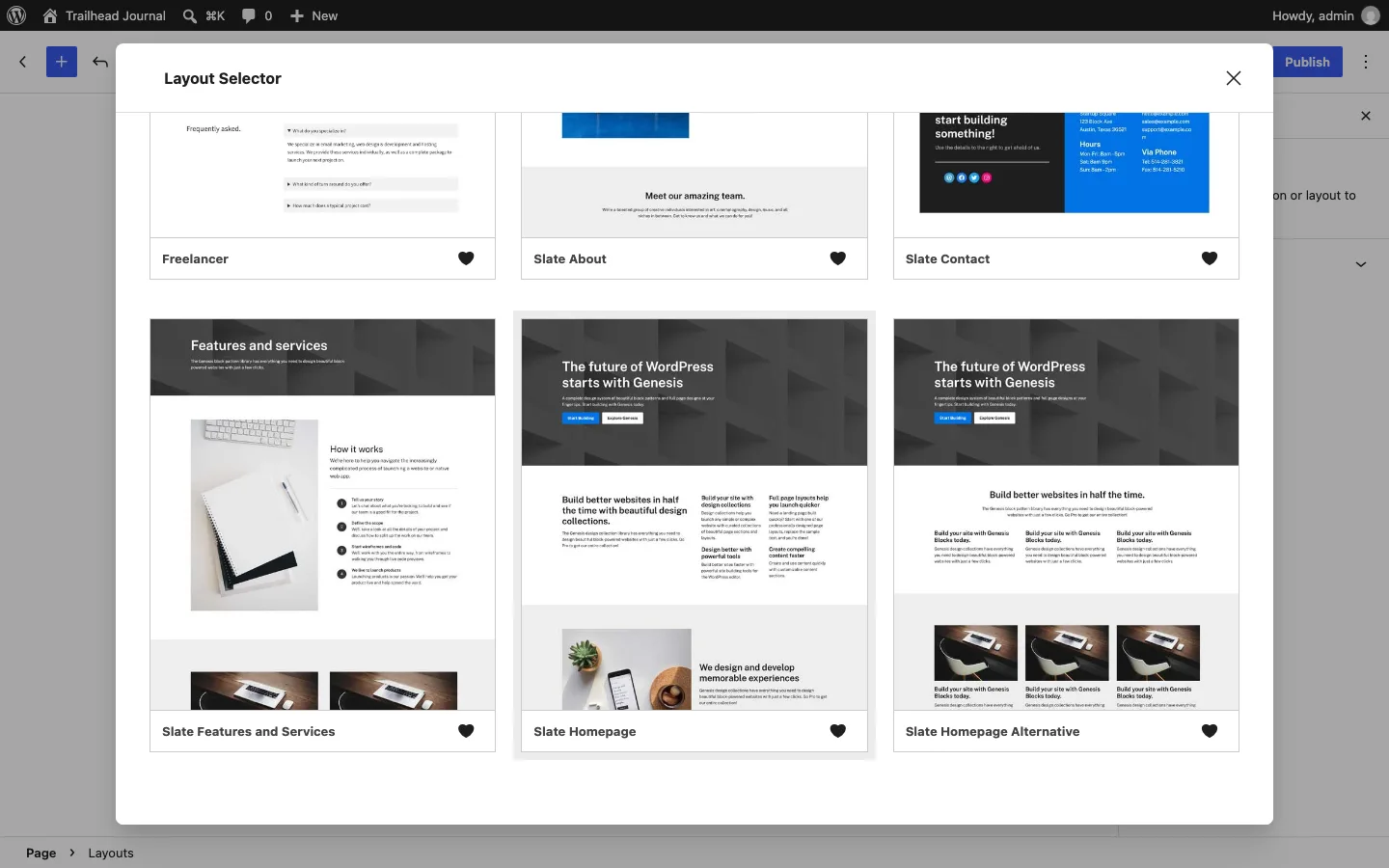
Block colors are separate from the theme accent, so changing one does not restyle everything. The newsletter block requires Mailchimp. Neither plugin needed an account for its basic tools, and promotions stayed mostly within their own screens. The combination works, but feels less integrated than a modern theme with global design controls.
We tested Genesis Block Theme, Genesis Blocks and Genesis Custom Blocks on a WordPress site. The Genesis Framework itself was assessed from StudioPress and WP Engine documentation and its official demo, rather than a framework installation.
Genesis Custom Blocks
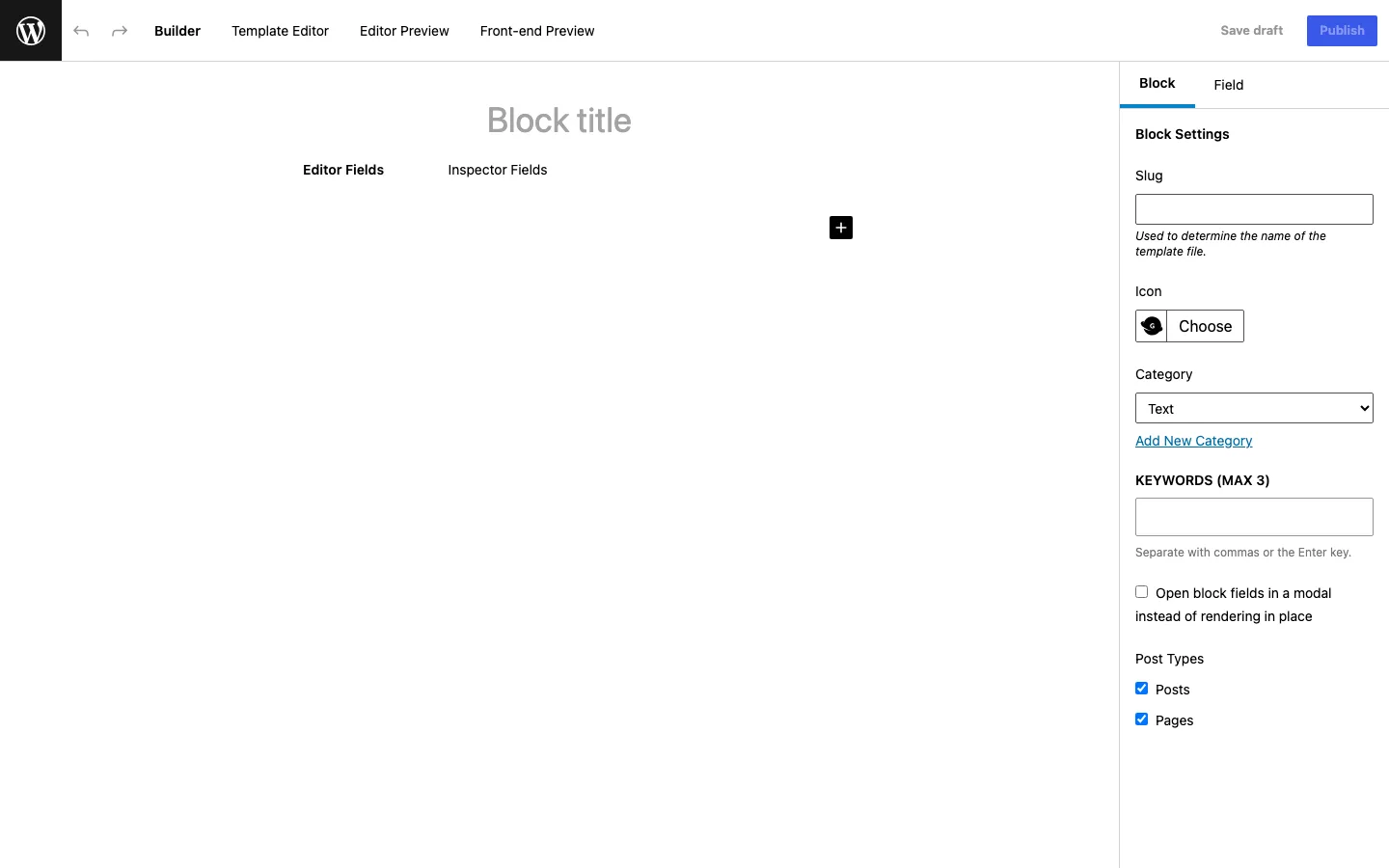
Creating a new block in Genesis Custom Blocks on our test install.
Genesis Custom Blocks is a tool for developers. You give a block a name, icon, category and fields (text, image, and so on), then write a template that controls how it looks. The builder has Builder, Template Editor, Editor Preview and Front-end Preview tabs. You can limit each block to posts, pages or both.
The free version covers the basic field types. Genesis Pro adds repeater, post, taxonomy, user, rich text and classic text fields, plus import and export of single blocks. If you do not write code, you can skip this plugin.
The Genesis Framework: What You Get

The official Genesis Sample demo, the starter child theme StudioPress publishes for the framework.
Since we could not install the framework, this section is based on StudioPress and WP Engine documentation and the Genesis Sample demo.
- Layouts. Content and sidebar, sidebar and content, full width and more, set site-wide or per page.
- Block editor sidebar. A Genesis panel in the editor lets you hide the title, breadcrumbs or featured image on a single page and pick a layout.
- SEO and schema. Genesis has its own SEO settings and outputs schema markup. The changelog notes it turns off its own schema when Yoast SEO outputs JSON-LD markup, so the two do not clash.
- Hooks and filters. Developers can add or move almost anything through Genesis hooks. This is the main reason developers have liked Genesis for years.
- One-click theme setup. Supported child themes can import demo content, plugins and widgets in one step.
- Breadcrumbs, numbered page navigation and custom body classes, according to WP Engine.
The Genesis Sample demo shows the default look: clean typography, plenty of white space, and WooCommerce pages for products, cart and checkout. Most StudioPress child themes follow the same simple style.
The FAQ is clear that child themes need Genesis: “you’ll need to have the Genesis framework in place to make the child theme run.” StudioPress also says its themes are translation-ready and work with WPML, including right-to-left languages.
Genesis and the Block Editor
Genesis works with the block editor. Child themes like Monochrome Pro and Essence Pro are block-based on the content side, and Genesis Blocks adds layouts and extra blocks.
What Genesis does not do is full site editing. Genesis and the StudioPress child themes are classic themes, so headers, footers and templates are still controlled by PHP and the Customizer. StudioPress’s Genesis Block Theme page says full site editing is “incoming.” The theme is still version 1.0.0, and its readme still says WordPress 5.7.
If you want to design your whole site, including the header and footer, with blocks, you need a block theme. Kadence, GeneratePress and Astra all have options that lean further into blocks than Genesis does.
Genesis Pricing in 2026
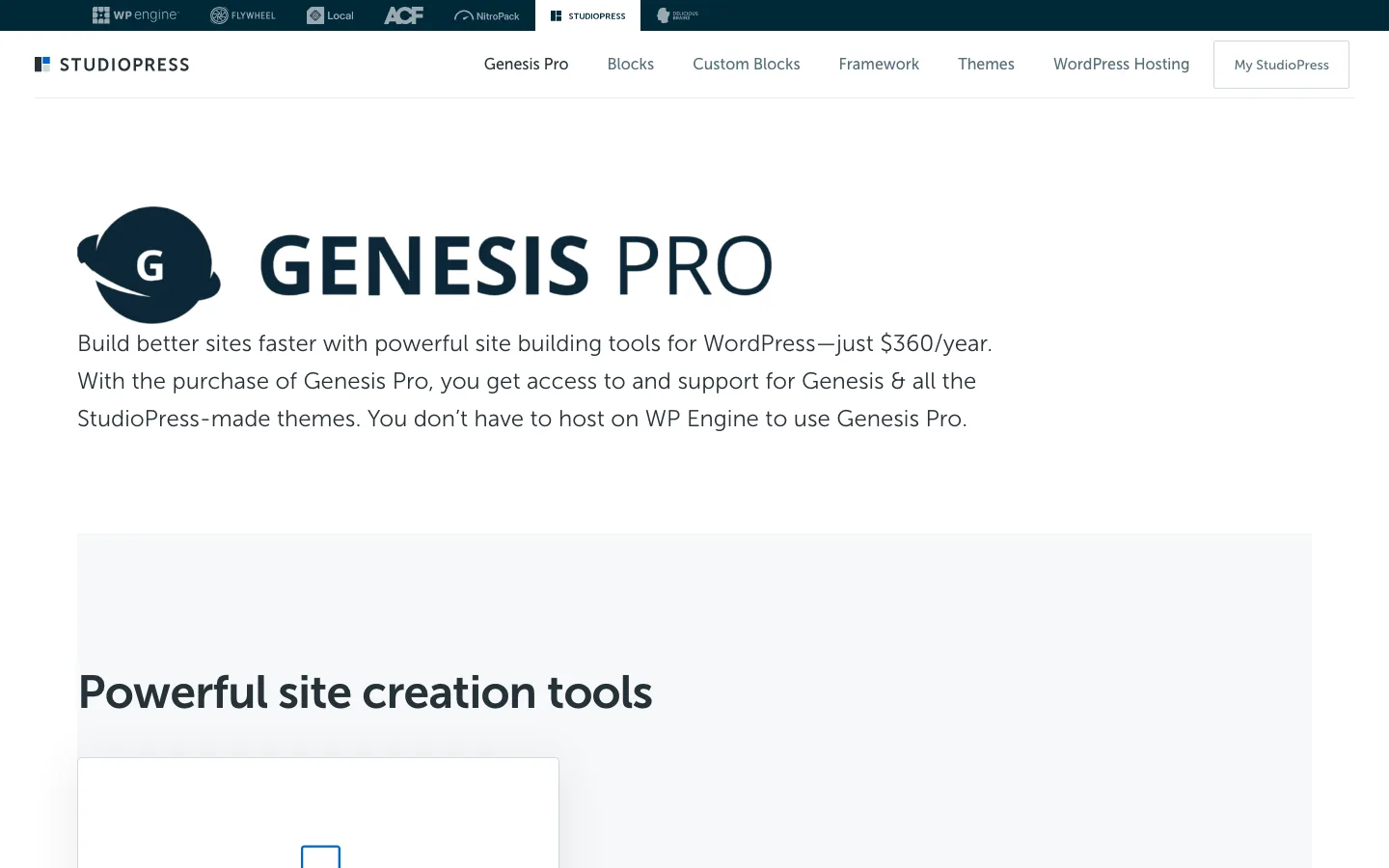
The Genesis Pro page on studiopress.com.
There are four ways to get Genesis. Prices are as of October 2026.
The free Genesis Framework download includes the parent theme and Genesis Sample child theme. Genesis Pro costs $360 annually and includes all ten StudioPress child themes, Blocks Pro, Custom Blocks Pro features, support and unlimited sites.
The WP Engine hosting offer checked here started at $28 monthly on discounted annual billing and included Genesis, StudioPress themes and Genesis Blocks. Genesis Pro remained a $30 monthly add-on. Child themes from third parties such as Feast Design Co, Restored 316 and BizBudding are sold separately at each seller’s prices.
You do not have to host with WP Engine to buy Genesis Pro. StudioPress offers a 60-day refund on Genesis Pro and a 30-day refund on theme packages.
Two licensing points worth knowing. StudioPress does not limit the number of sites you can use its themes on. And you can build and sell client sites with Genesis, but your clients do not get access to StudioPress support unless they buy from StudioPress themselves.
If you are comparing hosts, see our Kinsta vs WP Engine and WP Engine vs SiteGround comparisons.
Genesis Alternatives in 2026
If you are starting a new site, these themes are worth a look first:
- GeneratePress: A lightweight theme with a strong developer following, much like Genesis was in its prime. It has a free version and a paid add-on. See our GeneratePress review and our direct comparison of GeneratePress and Genesis.
- Kadence: A fast theme with a strong free version on WordPress.org and block-based starter templates. See our Kadence review.
- Astra: A popular lightweight theme with a free version on WordPress.org that works with both the block editor and page builders. See our Astra review and Astra vs GeneratePress.
- OceanWP: A free multipurpose theme with optional extensions. See our OceanWP review.
- Divi: If you want a visual builder instead of code, Divi bundles a theme and a drag-and-drop builder. See our Divi review.
- Beaver Builder: A page builder that has long worked well alongside Genesis child themes. See our Beaver Builder review.